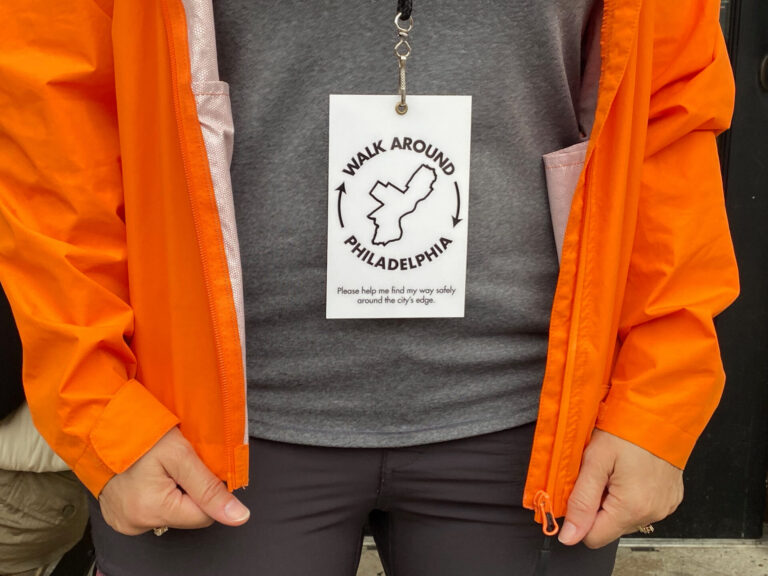
How we walk
WE FIND OUR WAY TOGETHER
Walk Around Philadelphia is not a guided tour and does not follow a single fixed route. Instead, we walk as a group through a process of collective wayfinding.
Facilitators help hold the container for each walking experience — sharing context, reminding the group of our guidelines, and supporting care along the way — but the path itself is shaped collectively. Together, we decide how to move through the city’s edges, choosing routes that balance curiosity, safety, access, and the needs of the group.
We aim to stay as close to the city’s border as possible, within reason. When the edge is inaccessible, unclear, or unsafe, we adapt. Detours and delays are not mistakes; they are opportunities for discovery and learning and part of how the Walk unfolds.
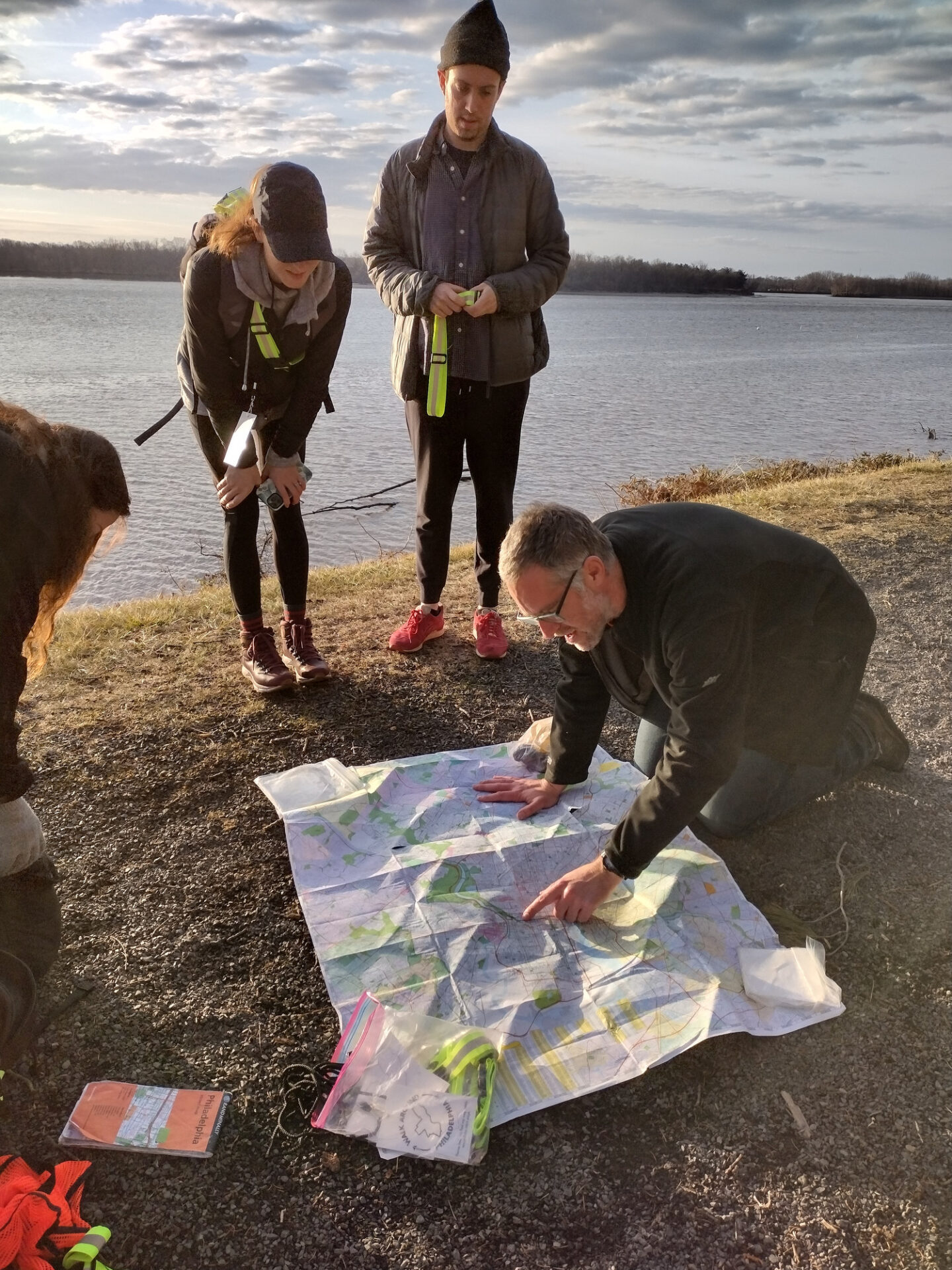
We Start Together
Each walking segment begins with a shared orientation. Before we set off, facilitators gather the group to review our guidelines, outline the day’s general plan, and make space for introductions and questions. This opening moment helps establish shared expectations, care, and connection for the day ahead.
While participants are always welcome to peel off, take breaks, or head home as needed during the walk, being present for the start of the day is important. It’s how we align as a group and set the conditions for walking well together.
We move together
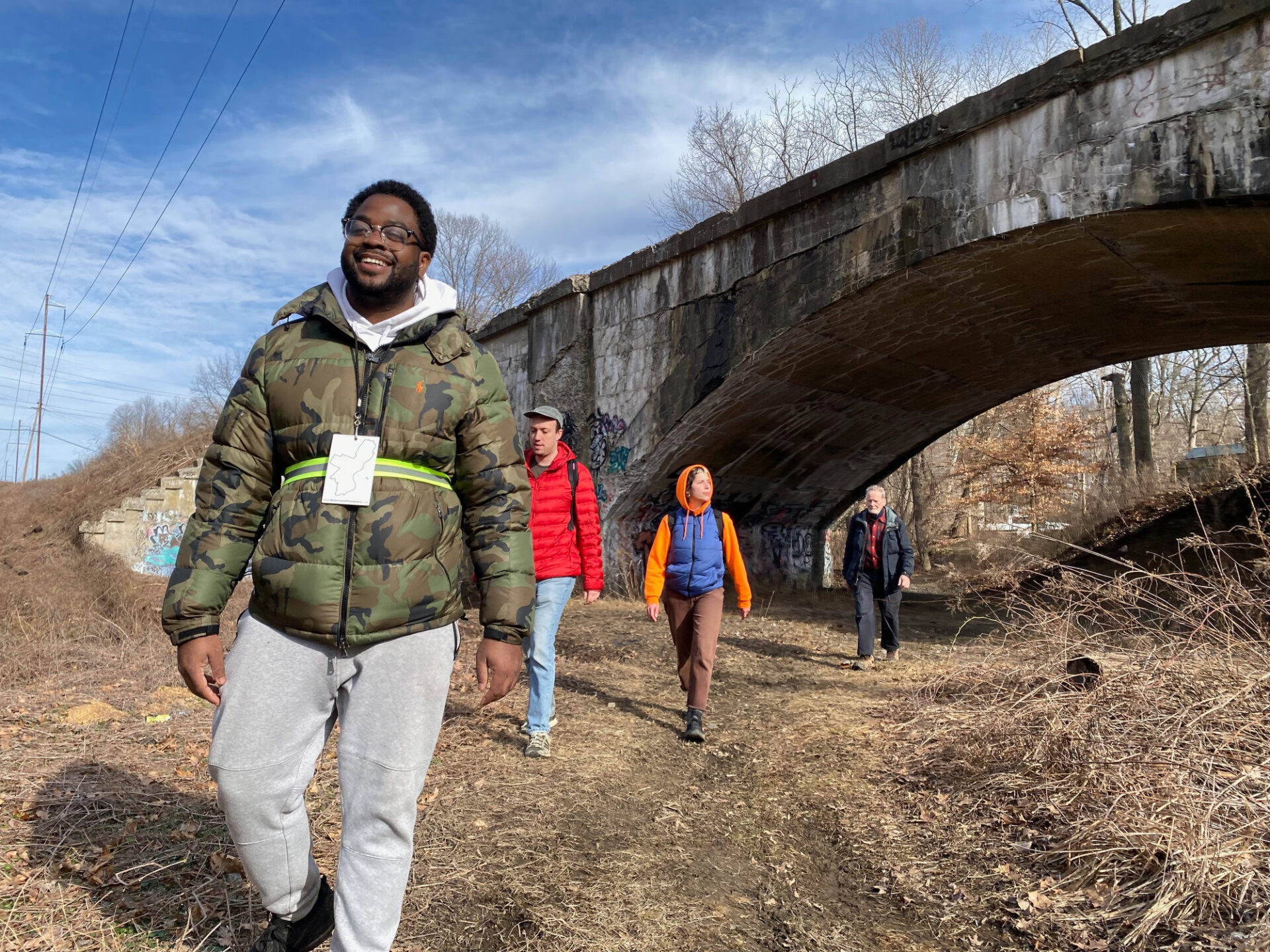
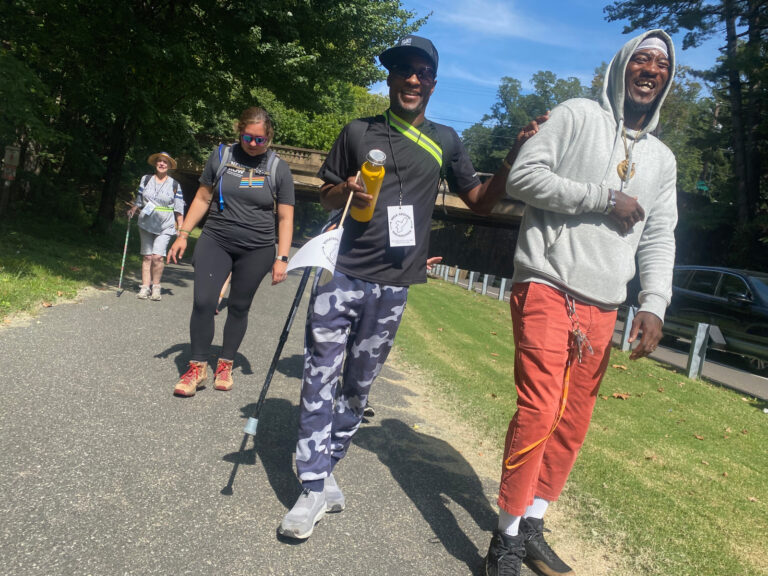
We walk in small groups, at a shared pace. The Walk is shaped as much by how we move together as by where we go.
Participants are encouraged to practice stepping up and stepping back. Those who are comfortable leading or navigating are invited to make space for others; those who are used to following are invited to try offering direction or insight. Anyone can suggest a pause, ask a question, or name a concern.
A simple phrase like “hey, hold up!” is always welcome. Side-quests, water stops, bathroom searches, and moments of rest are part of the practice.
We navigate our boundaries
The Walk welcomes a wide range of experiences — much curiosity and joy, but also frustration & fatigue too! We may push our boundaries through some potential discomfort, walking further than we might be used to, or through more challenging terrain and weather. But we also listen to our bodies and honor our own boundaries as we go.
Participants are encouraged to:
- adjust pace & take breaks as needed
- leave early or head home if necessary
There is no requirement to complete a full segment or cycle. Participating in ways that are sustainable for you is always the right choice.
We pay attention
Walking the perimeter invites a different kind of attention. Moving slowly through unfamiliar and familiar spaces opens opportunities to notice details that are often missed.
Phones and cameras are welcome as tools for navigation and documentation, but participants are encouraged to limit distractions when possible — saving messages, posts, and reflections for later so that attention can stay with the group and the place.
We approach everything and everyone with curiosity and respect
How we walk matters. Every step is taken through living neighborhoods, working landscapes, and shared spaces. Participants are asked to move with respect — for fellow walkers, for people encountered along the way, and for the places we pass through.
Care, consent, and responsibility are ongoing practices, shaped by the group and the moment.
Before, During & After
Before THE WALK
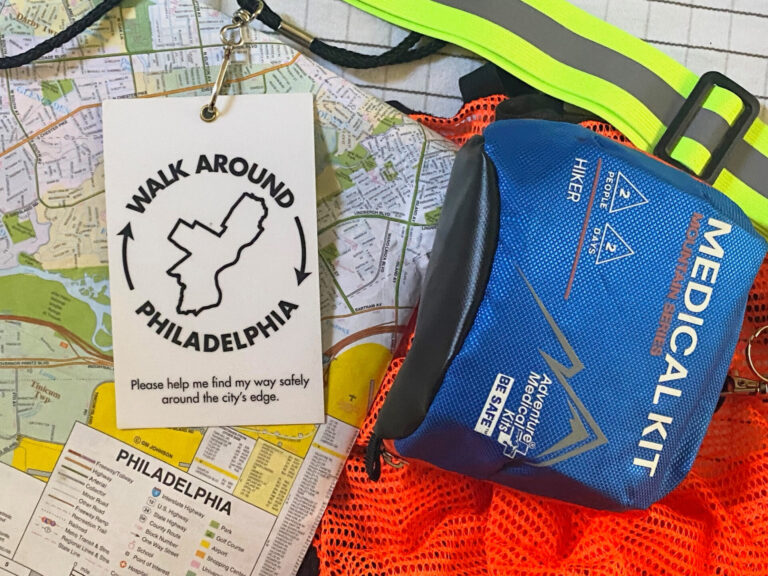
Participants are invited to orient themselves — reviewing maps and guidelines, packing thoughtfully, and arriving with curiosity rather than expectations.
DURING THE WALK
The focus is on presence & patience, openness to the unexpected, noticing what the landscape offers and the group needs.
After THE WALK
There are opportunities to reflect, share, and reconnect through in-person and virtual events, discussion forums, exhibits and more.
Where to go next:
Use a clear and attention-grabbing short paragraph to engage your audience and draw them into reading the rest of your content.
How we keep ourselves and each other safe
How we work to make these experiences accessible to all
All your questions… answered!