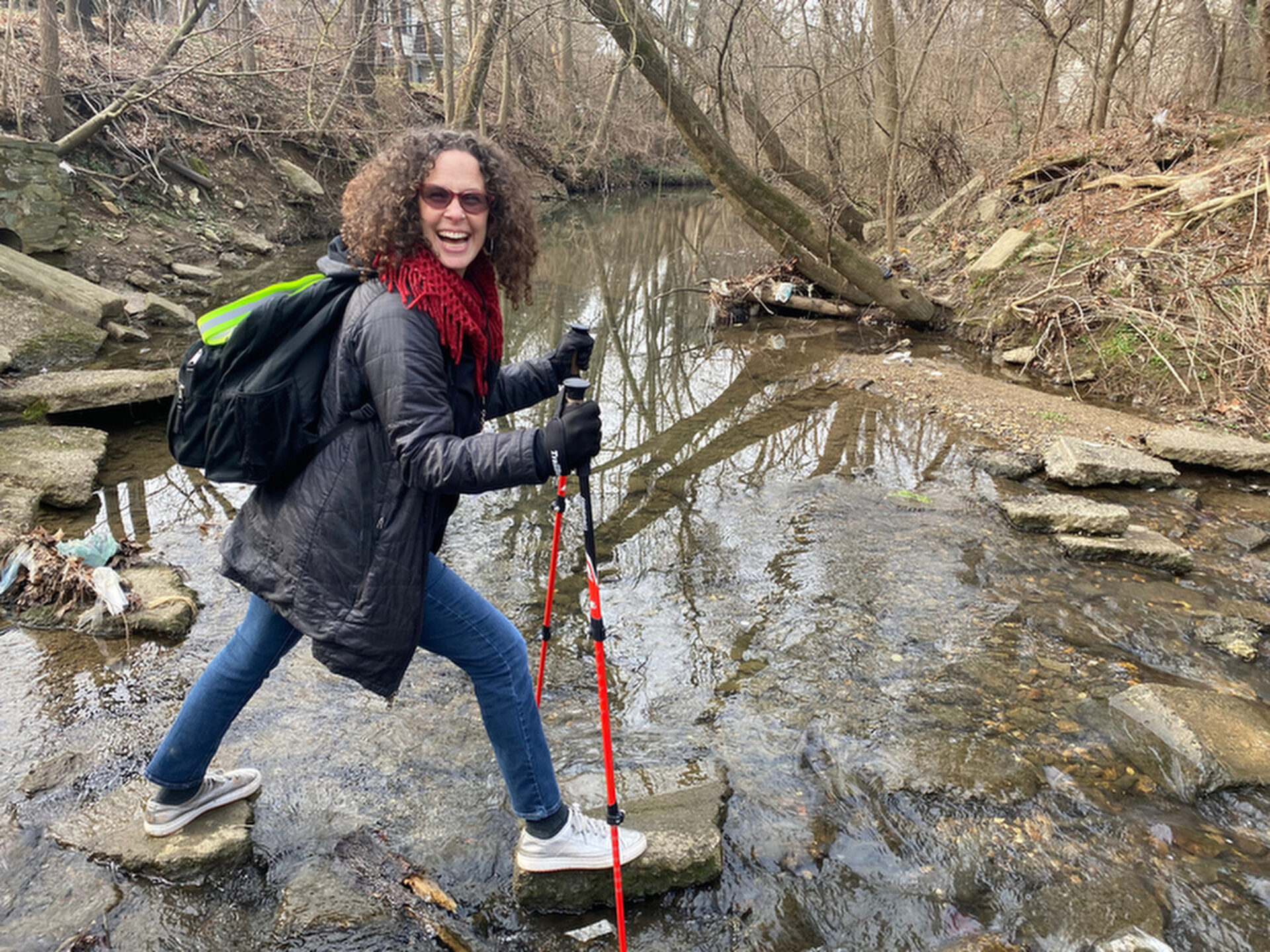
Why we walk
Start at the Margins
Most cities are understood from their centers — through their downtown cores and historic districts.
Walk Around Philadelphia invites you to instead consider the city from its edges, and all that they hold.
By walking the city’s perimeter, we encounter Philadelphia through its furthest reaches rather than its center.
These edge spaces reveal how land, water, infrastructure, and history shape daily life — and how those forces are felt differently across neighborhoods.
Starting from the margins invites a wider, more connected understanding of the city we share.
Sharing a path,
not just crossing paths
Walk Around Philadelphia brings together neighbors who might otherwise never connect — not just to meet for a moment, but to share in a unique experience of the city together.
Walking side by side over hours and miles creates conditions for connection that are increasingly rare. Conversation unfolds naturally. Silences are shared. Differences coexist without needing to be resolved.
In a time when many of us live parallel lives — sometimes even on the same block — the Walk helps re-weave the social fabric by grounding connection in shared movement, effort, and presence.
Navigating Borders & boundaries – Both literal & Metaphorical
Walking the perimeter makes borders visible — and sometimes reveals where they are anything but clear. Along the route, boundaries appear as rivers, fences, major roads, and rail lines. Elsewhere, jurisdictional lines are unmarked or abstract, cutting invisibly through neighborhoods, homes, and infrastructure — even across airport runways.
These moments invite participants to notice how borders are drawn, enforced, or lived with, and how they shape access, movement, and belonging in uneven ways.
As participants navigate these physical boundaries, other kinds of edges often come into view. Walking the perimeter can involve gently pushing personal boundaries — exploring unfamiliar places or navigating discomfort — while also honoring limits by listening to one’s body, respecting pace, and choosing when not to push further.
Finally, the Walk creates opportunities to cross interpersonal boundaries that often divide daily life: differences of background, culture, class, politics, religion, or lived experience. Rather than collapsing those differences, walking together can open space for curiosity, collaboration, and shared presence — replacing rigid lines of “us” and “them” with more nuanced ways of being together.
Learning through walking
The Walk creates space for many kinds of learning at once.
Depending on the segment, the season, and the people present, participants encounter overlapping layers of knowledge — not as lessons delivered, but as questions and insights that arise through shared experience.
Along the way, participants may learn about:
Ecological systems — ecosystems, waterways, and the ways land and water interact
Built systems — infrastructure, industry, zoning, land use, and the hidden networks that support daily life
Histories and power — Indigenous presence, colonization, commerce, incarceration, and patterns of access and exclusion
Collective practices — caretaking, decision-making, wayfinding, and reading the city together
This learning is experiential rather than instructional. It emerges through walking, noticing, listening, and reflecting together — shaped by what the landscape offers and what each group brings.
Just as importantly, the Walk introduces many participants to places they might not otherwise encounter: parks, cultural sites, waterways, community spaces, and overlooked corridors along the city’s edge.
For many, these first encounters become return visits — places to revisit, care for, or stay connected to long after the walk itself.
Values practiced along the way
These values are not rules or ideals to achieve, but qualities that are practiced, tested, and strengthened through walking together.
Curiosity
Noticing, questioning, and discovering the unfamiliar — even in familiar places. Looking again and letting the city surprise us.
Mutual Care
Practicing safety, kindness, and support through pacing together, sharing resources, checking in, and tending to one another.
Boundary Awareness
Practicing safety, kindness, and support through pacing together, sharing resources, checking in, and tending to one another.
Stewardship
Developing care for waterways, parks, industrial corridors, and overlooked spaces — often leading to action beyond the Walk.
Gratitude
Appreciation for land, city, companions, accessibility supports, volunteers, and the chance to see Philadelphia differently.
Humility
Recognizing that the city’s edges offer perspectives we miss from the center & developing a sense of the vastness of the city.
Resilience
Adapting to weather, terrain, detours, and uncertainty. Cultivating steady perseverance rather than speed.
Dialogue & Listening
Listening to one another, to neighborhoods, to histories held in the landscape. Many voices, no single narrative.
Community Connection
Recognizing the perimeter as shared space, and discovering unexpected relationships across neighborhoods and identities.
Courage
The willingness to step into the unfamiliar and walk alongside strangers with openness and trust.
Presence
Slow, embodied attention. Moving at a human pace that allows for deeper observation and connection.
Equity & Inclusion
Acknowledging unequal access, mobility, trust, and resources — and treating accessibility as an ongoing practice.
Imagination
Seeing possibility where others see obstacles. Dreaming future trails, safer crossings, and new relationships to land and water.
Patience & Pace
Honoring slowness, accepting (and celebrating) detours and delays, and recognizing that progress is often non-linear.
Joy
Delight in the small and unexpected: river birds, train horns, shared snacks, odd signage, wild edges, and camaraderie.
An ongoing practice
Why we walk is not fixed. It evolves with the city, with the people who participate, and with the questions that emerge along the way.
The Walk offers a framework — not for arriving at answers, but for continuing to explore together.
Want to learn more?
Use a clear and attention-grabbing short paragraph to engage your audience and draw them into reading the rest of your content.
What participation looks like in practice
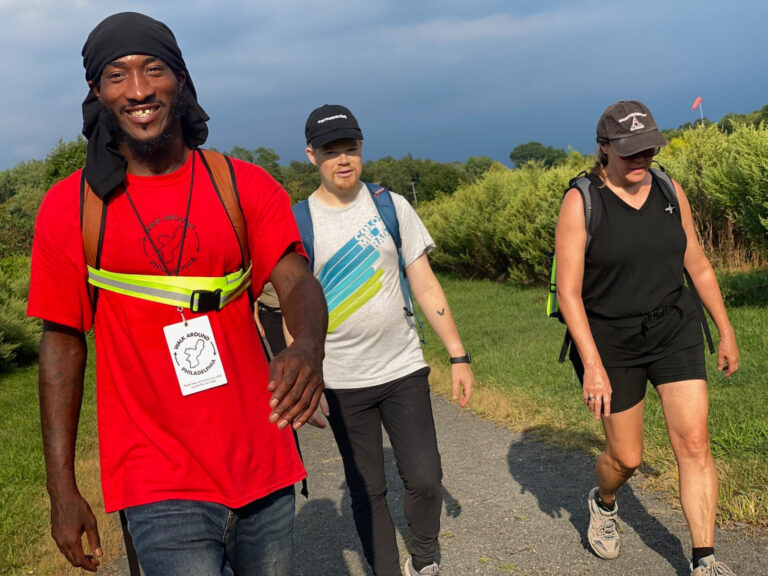
How we keep ourselves and each other safe
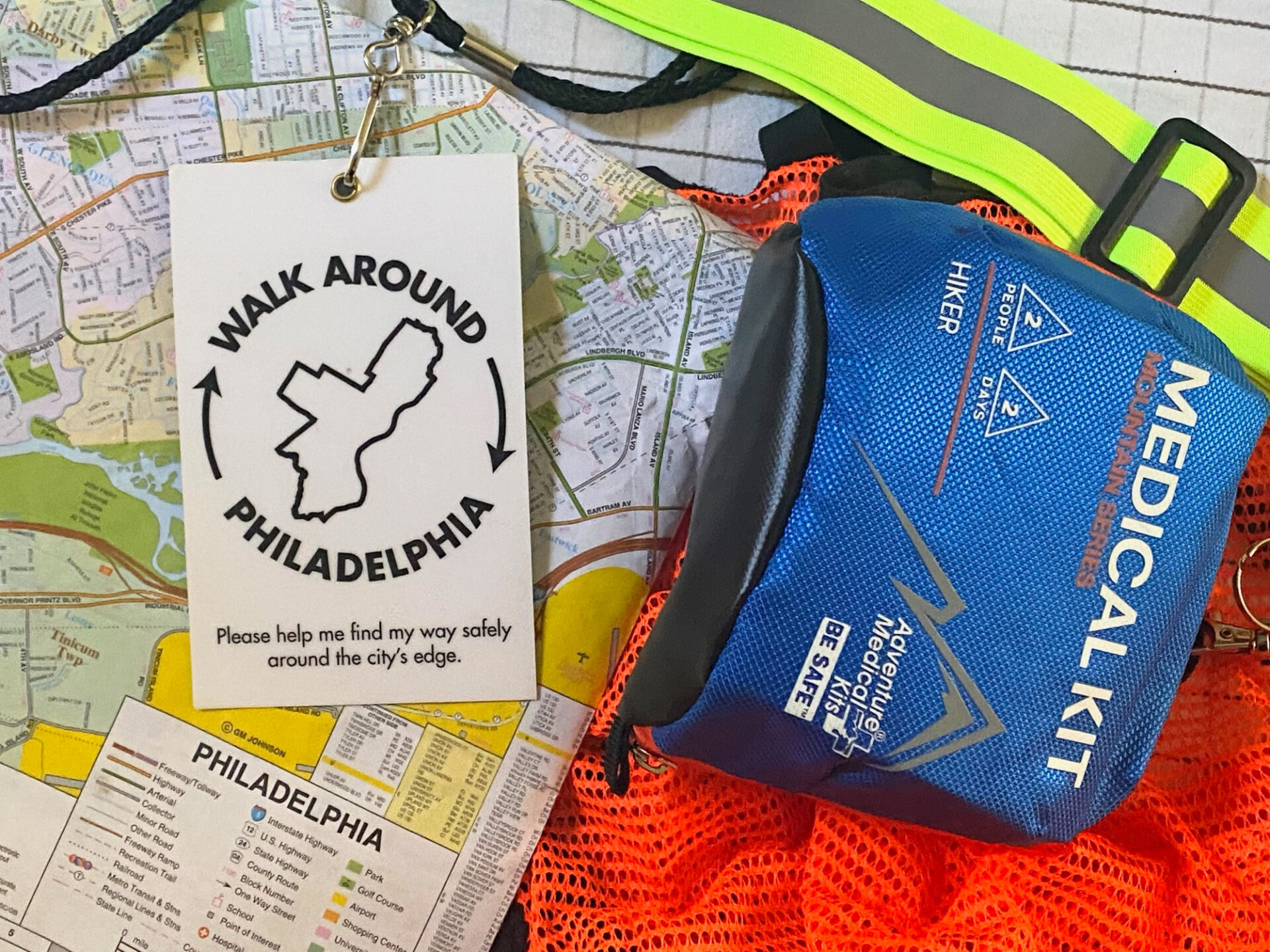
How we work to make these experiences accessible to all